Rechercher dans ce blog

Sunday, May 30, 2021

The Best Hard Seltzers to Sip This Season - Rolling Stone

hard.indah.link

Products featured are independently selected by our editorial team and we may earn a commission from purchases made from our links; the retailer may also receive certain auditable data for accounting purposes.

Before we see any retrospectives of the year try to preemptively declare this the “summer of [blank]”, let’s set the record straight—this is undeniably the summer of hard seltzer. Yes, it seems we’ve all emerged from a long quarantine winter ready to embrace the light, crisp, and fresh flavors of spiked sparkling water.

Long gone are the days when White Claw was the only name in town—in fact, over the past year, the best hard seltzers have exploded in popularity, bringing forth tons of convenient alternatives to those who want something lighter on the alcohol by volume (and calories) then say, a heavy IPA or shot-loaded cocktail.

Ideal for leisurely sipping on the beach, or throwing back at a BBQ and still maintaining a conversation, the best hard seltzers stick to around 90-100 calories for one 12 oz. can, but also tend to only fall around 4.5-5 percent ABV (so you’re not wasted after one drink).

Buy: Best Hard Seltzer Brands at $16.99+

You can also shop many of the best hard seltzer brands online these days, with everyone from Amazon to Drizly delivering cases to your door. No need to run to a liquor store only to find your favorite hard seltzer brand sold out.

We’re loathe to call them trendy, but it’s true that brands are getting pretty creative with the simple malt beverage and bubbly water: there’s wine spritzer-esque seltzers, spiked iced tea seltzers, hard smoothie seltzers, and we don’t think it’ll be long before there’s a hard craft beer seltzer at this point. But with a flood of spiked seltzer flooding in, how do you choose? We’ve rounded up our favorite lightly-flavored, gently bubbling beverages so you can pick your flavor of the summer.

1. Bon Viv 

BEST OVERALL
Bon Viv Spiked Seltzer

Drizly

One of the OGs of the spiked seltzer trend, you can’t go wrong with Bon Viv’s classic bubbly—this is the graduate school of seltzers, moving on to a more elevated taste after leaving your old-school days of Mike’s Hard Lemonade behind (who also, coincidentally, now offer a hard seltzer lemonade).

The beautiful carbonation here is almost as light as champagne, which makes sense, since Bon Viv uses a unique cold fermentation process using champagne yeast mixed with fruit oils. All of their seltzers are naturally-flavored, with a crisp, clean taste that is particularly bubbly-forward. You won’t get the same level of sweetness here as some of the mass-appeal brands like Corona or Bud Light’s forays into the seltzer wars. But their flavors are super refined, with offerings like black cherry, cranberry, grapefruit and mango.

Their flavor combinations in the Bon Viv “Blends” variety pack are also particularly sophisticated and almost cocktail-like. Fans of botanicals will love the pear elderflower and clementine hibiscus seltzers, and the coconut pineapple seltzer feels like you just ordered a pina colada from a poolside bar. With just 90 calories and 4.5 percent ABV, Bon Viv knows how to keep it as light and refreshing as if you were on your own private island.

Buy: Bon Viv Spiked Seltzer Variety Pack at $17.46

2. Truly

BEST NATURAL
Truly Hard Seltzer

Drizly

Truly Hard Seltzer is truly the crowd-pleasing favorite of seltzers—not just because if its 100 calories or that it’s gluten-free, but because it’s one of the most widely accessible “starter” hard seltzers with an impressively all-natural ingredient list.

I’m sure you could consider White Claw to be the most popular of the readily-available seltzers, but we prefer the flavors in Truly’s arsenal, especially their Berry Mix Pack which comes with black cherry, wild berry, blueberry & acai, and raspberry lime flavors (their tropical flavors are also excellent). Even though it has major sweetened diet soda vibes, it’s probably the closest thing we have to a hard beer seltzer right now, too: the base is fermented cane sugar combined with all-natural flavors. 

We also appreciate that for a natural seltzer, it doesn’t hold back when it comes to ABV, at 5 percent (though you can go even harder with their Extra Hard seltzer). But it still remains light and refreshing enough make it through a long backyard barbeque.

Buy: Truly Hard Seltzer Berry Mix Pack at $18.97

3. Nude Hard Seltzer

BEST NEW HARD SELTZER
nude hard seltzer

Drizly

There’s no better feeling that going nude for summer, at least when it comes to what you’re drinking. We love the offerings from new Canadian-based brand, Nude, which taste like ultra-premium La Croix, with just the right amount of fizz and flavor and just the right buzz (I.e. no sugar-induced hangovers here). Everything is made from all-natural ingredients (think raspberry, peach, lemon and lime) and each can comes in at 100 calories, with 0 carbs, while being 100% vegan, keto-friendly, sugar, and sweetener-free.

Nude’s fittingly simply cans look right at home in your fridge or cooler and are an elevated take on hard seltzers, with no need for unnecessary branding that scream “PARTY TIME.” This is a hard seltzer you can sip at a party, sure, but also a great drink to crack open as you wind down your day at work or want a refreshing pick-me-up after a day on the golf course or tennis courts. Nude also makes Hard Iced Teas and vodka sodas too.

Buy: Nude Hard Seltzer 6-Pack at $10.99

4. High Noon 

BEST VODKA-BASED
High Noon Hard Seltzer

Drizly

Looking for a way to replace your standard summer bar order of a vodka soda? High Noon’s vodka-based (rather than malt-based) seltzer feels like a club cocktail you could serve in a red solo cup, or in a ice-filled tasting glass—we mean this in the best way.

High Noon’s seltzer is actually distilled several times from Midwestern corn, blended with sparkling water, and then mixed with real fruit juice. Emphasis on the fruitiness here, because these seltzers smell and taste remarkably flavorful (especially the pineapple and grapefruit flavors). We wouldn’t even consider put them in the same category as some other seltzer—this is pretty much a light mixed drink, but still at just 100 calories and 5% ABV.

It also just feels heavier than other seltzers on our list, which is great when you’re looking for a drink that doesn’t just taste like a hint of a hint of a hint of fruit. It’s just as refreshing though, with tart, sweet flavors like black cherry, lime, peach, and watermelon. You don’t have to flag down a bartender to crack open one of High Noon’s cocktail-like seltzers, though.

Buy: High Noon Vodka Soda Variety Pack at $28.59

5. Ficks Craft Hard Seltzers

BEST CRAFT
Ficks Hard Seltzer

Drizly

Ficks wants you to join the “Farm to Fizz” movement—which is just another way to say that craft and independent local breweries have seen the seltzer light and are coming for the summertime market.

Crafted in California’s wine country, Ficks not only locally sources ingredients, but their drinks are just pack with full-bodied fruit flavored. You get that unmistakable punch of real fruit because of their cold-pressing process (similar to juicing) for flavors like blackberry, cranberry, grapefruit, and lime. All are as fragrant as if they were just picked off the vine, but with enough zest and tang that embodies the best of what spiked seltzers have to offer.

Skipping the malt liquor base was a good move here, as the fermented orange juice base combined from other flavors really lets the sweeter flavor profiles shine without becoming too cloying or artificial. Like a boozier juice box, at 5% ABV and a mere 100 calories, drinking one of these feels like a less pretentious ride through wine country. Although, this would still pair well with a cheese board.

Buy: Ficks Hard Seltzer Variety Pack at $19.99

Adblock test (Why?)

The Link Lonk


May 31, 2021 at 12:14AM
https://www.rollingstone.com/product-recommendations/lifestyle/best-hard-seltzers-1175796/

The Best Hard Seltzers to Sip This Season - Rolling Stone

https://news.google.com/search?q=hard&hl=en-US&gl=US&ceid=US:en

‘It’s Going to Be a Big Summer for Hard Seltzer’ - The New York Times

hard.indah.link

The music should be pumping and the burgers and jerk chicken wings flying out of the kitchen this holiday weekend at the Rambler Kitchen and Tap in the North Center neighborhood of Chicago.

To wash it down, patrons might go with a mixed drink or one of the 20 craft beers the bar sells. But many will order a hard seltzer. The Rambler expects to sell close to 500 cans in flavors like peach, pineapple and grapefruit pomelo.

“We’ll sell a lot of buckets of White Claw and Truly seltzers,” said Sam Stone, a co-owner of the Rambler. “It’s going to be a big summer for hard seltzer.”

The Memorial Day weekend kicks off what many hope will be a more normal summer, when kids start counting down the number of days left in school, people head back to the beach and grills heat up for backyard parties that went poof last year because of the pandemic. And for the hard seltzer industry, it’s the start of a dizzying period when dozens of old and new competitors vie to be the boozy, bubbly drink of the season.

A grown-up cousin to fizzy seltzer waters like LaCroix, alcoholic hard seltzers became a sensation before the pandemic, racking up around $500 million in sales in 2018, according to NielsenIQ. But in the past year, when people couldn’t go to their favorite bars and restaurants, they picked up cases and cases of the drinks at liquor and grocery stores, sending revenues soaring to more than $4 billion in 2020.

Rambler customers drinking Vizzy, a hard seltzer that Molson Coors introduced last year.
Lyndon French for The New York Times

Analysts are betting that another big wave of seltzer buying will hit this summer. Nik Modi, an analyst at RBC Capital Markets, notes that hard seltzers are popular at group gatherings, which largely didn’t happen last year.

“This summer,” Mr. Modi said, “is going to be a completely different ballgame.” He and others predict that annual sales will top $8 billion over the next four years.

Dave Burwick, the chief executive of Boston Beer, said on CNBC last year that the growth of hard seltzers was the biggest shift in the beer industry since light beers were widely introduced in the 1970s. Boston Beer, the company behind Sam Adams, also makes Truly Hard Seltzer.

While White Claw and Truly — the Coca-Cola and Pepsi of hard seltzer — capture about 70 percent of the market, everyone wants in on the action, drawn by the staggering growth. Old-school beer companies, spirits giants, winemakers and others are fermenting sugar solutions and adding seasonal flavors like watermelon, black cherry and strawberry lemonade to create their own buzzy concoctions. (Care for passion fruit-orange-guava?) They’re also trying to outdo one another by coming up with new variations, like so-called spiked seltzers that use rum or tequila, seltzers with antioxidants or even “hard coffee.”

Boston Beer introduced Truly Iced Tea Hard Seltzer this year and a few weeks ago released an ad campaign with the British pop singer Dua Lipa. This spring, the hip-hop star Travis Scott released Cacti, a seltzer made with blue agave syrup, in a partnership with Anheuser-Busch. It quickly sold out in many locations.

“People were lining up outside of the stores to buy Cacti and share pictures of themselves with their carts full of Cacti,” said Marcel Marcondes, the chief marketing officer for Anheuser-Busch.

Also this spring, Topo Chico Hard Seltzer was released. A partnership between Coca-Cola and Molson Coors Beverage, it hit shelves in 16 markets across the country, chasing the cult following of Topo Chico’s seltzer water in the South.

Todd Anderson for The New York Times

“I feel like I can walk into a party saying, ‘Oh, yeah, I brought the Topo Chico,’” said Dane Cardiel, 32, who works in business development for a podcast company and lives in Esopus, N.Y., about 60 miles south of Albany.

How flavored bubbly water with alcohol became a national phenomenon is partly due to social media videos that went viral and clever marketing that sold hard seltzers as a “healthier” alcohol choice.

White Claw’s slim cans prominently state that the drinks contain only 100 calories, are gluten free and have only two grams each of carbohydrates and sugar. The brand is owned by the Canadian billionaire Anthony von Mandl, who created Mike’s Hard Lemonade.

“The health and wellness element is front and center in terms of the visual marketing,” said Vivien Azer, an analyst at the Cowen investment firm. “Every brand’s packaging features its relatively low carb and sugar data.”

On top of that, the alcohol content in most hard seltzers, about 5 percent, or the same as 12 ounces of a typical beer, is less than a glass of wine or a mixed drink. That makes it easier for people to sip at a party or while watching a game without getting intoxicated or winding up with the belly-full-of-beer feeling.

“It’s a nice drink for an afternoon on the patio,” said Shelley Majeres, the general manager of Blake Street Tavern in downtown Denver. “You can drink four or five of them in an afternoon and not have a big hangover or get really drunk.”

Blake Street, an 18,000-square-foot sports bar, started selling hard seltzers two years ago. Today, they make up about 20 percent of its can and bottle sales.

The industry has also neatly sidestepped the gender issue that plagued earlier, lighter alcoholic alternatives like Zima, which became popular with women but struggled to be adopted by men.

Lyndon French for The New York Times

“I’ve got just as many men as women drinking it,” said Nick Zeto, the owner of Boston Beer Garden in Naples, Fla. “And it started with the millennials, but now I have people in their 40s, 50s and 60s ordering it.”

That kind of broad appeal is attractive to beer, wine and spirits companies.

“We view ourselves as the challenger brand,” said Michelle St. Jacques, the chief marketing officer of Molson Coors, which has been making beer since the late 1700s but hopes to end this year with 10 percent of the hard seltzer market.

Last spring, the company released Vizzy, a hard seltzer that contains vitamin C. Top Chico came this spring. “We feel like we’re making great progress in seltzer by not trying to bring me-too products, but rather products and brands that have a clear difference,” Ms. St. Jacques said.

While grocery and liquor stores have made plenty of space available to the hard seltzer brands that people drink at home, the competition to get into restaurants and bars is fierce. Most want to offer only two or three brands to their customers.

“Oh, my god, I get presented with new hard seltzer whenever they can get my attention,” said Mr. Stone, who sells six brands at the Rambler. The crowd favorite, he said, is the vodka-based High Noon Sun Sips peach, made by E.&J. Gallo Winery. “Everybody, from the big brands to small, new ones, are getting into the hard seltzer game.”

Adblock test (Why?)

The Link Lonk


May 30, 2021 at 04:00PM
https://www.nytimes.com/2021/05/30/business/white-claw-hard-seltzer-sales.html

‘It’s Going to Be a Big Summer for Hard Seltzer’ - The New York Times

https://news.google.com/search?q=hard&hl=en-US&gl=US&ceid=US:en

Kiszla: The NBA playoffs are hard. This is no time for Nuggets’ Michael Porter Jr. to play soft. - The Denver Post

hard.indah.link

Who were these jokers, jesters and imposters that Denver center Nikola Jokic was forced to drag up and down the court?

The NBA invited the Nuggets to a playoff game on Saturday. They politely and meekly refused to show up, resulting in a 115-95 loss to Portland that wasn’t even as close as the score would indicate.

“I thought we had some guys that were tentative, that looked a little scared, that we played scared,” said Denver coach Michael Malone, holding nothing back as he blasted his players’ resolve.

If Jokic is not at his MVP best, can the Nuggets win this best-of-seven series, now knotted at two victories apiece?

The Magic 8-Ball says: Outlook not so good.

And Denver is going to be stuck behind that 8-Ball unless young forward Michael Porter Jr steps up. He was invisible in this blowout loss, taking only three shots, scoring a measly three points. He was tentative. He played scared.

Porter wants to be the man. And when the stroke on his jumper evokes sweet dreams of Kevin Durant, fans and analysts alike can get carried away, hoping MPJ can be KD when he grows up.

But growing up is hard to do in the NBA playoffs. And Porter has yet to celebrate his 23rd birthday.

So maybe it’s no surprise Porter was schooled like a child by Portland swingman Norman Powell, a wily six-year veteran who won a championship ring in Toronto before joining the Blazers earlier this year at the trade deadline.

But the Nuggets cannot afford MPJ to disappear again in this series, now hanging in the balance. “We, as teammates have to find him better looks,” Jokic said.

The playoffs are a grind. OK, compared to the regular season, the travel between games is more leisurely and in-game timeouts can certainly be more relaxing, as the television rights-holder pushes to move more merchandise during commercial breaks. So the strain on a player isn’t necessarily physical. It’s the mental stress that exerts a toll.

With Damian Lillard’s scoring touch missing in action, the Blazers won with energy and aggression — two items the Nuggets left back at the hotel. While Denver casually hung around through halftime, Portland erased any inkling of intrigue from Game 4 during the opening five minutes of the third quarter, outscoring the Nuggets 16-4 and increasing its lead to 73-51.

And the rest of the third period? It only got worse. The worry lines on Malone’s face deepened and his exasperation grew as the Blazers’ lead ballooned to 30 points.

After the loss, Malone was ticked. He ranted about his starting five’s lack of effort and his team’s failure to stand up and look a desperate Portland team in the eye.

“When you guys write: ‘Coach Malone goes on a rant,’ it’s not a rant. I’m just stating facts. There is no rant here,” Malone said. “Our players have heard it from me during the game and at halftime and after the game.”

With a chance to put this series in a headlock, Denver went through the motions. On the trip to Portland, the Nuggets took care of business early, stealing a win in Game 3 on the fourth-quarter heroics of Austin Rivers. But then the visitors to Rip City let their focus go as hazy as a grapefruit IPA.

When the Nuggets could’ve picked up a hammer, they took a step back, got on their heels  and let the Blazers burn them. Getting run out of the gym in this situation is simply a mistake of human nature.

But it’s a mistake that a championship team simply doesn’t make.

The NBA playoffs are hard. The Nuggets went soft in Game 4.

Malone was absolutely correct to declare that unacceptable.

This series, now a best-of-three, is going to be won as much on mental toughness as basketball skill. “It’s going to be a dogfight,” Nuggets forward JaMychal Green said.

Injured guard Jamal Murray, who often hit the big shots when Denver needed it most during last year’s playoff run, isn’t walking through the locker room door and onto the floor.

As MVP magnificent as Jokic can be, can Denver beat the Blazers with Jokic alone? Ain’t gonna happen.

The Nuggets need MPJ to grow up and step up at crunch time. At his tender age of 22, is it fair to ask:

Is he man enough?

Adblock test (Why?)

The Link Lonk


May 30, 2021 at 07:17AM
https://www.denverpost.com/2021/05/29/nuggets-nba-playoffs-are-hard/

Kiszla: The NBA playoffs are hard. This is no time for Nuggets’ Michael Porter Jr. to play soft. - The Denver Post

https://news.google.com/search?q=hard&hl=en-US&gl=US&ceid=US:en

Julio Urías hit hard as Dodgers lose to Giants, fall to third - Los Angeles Times

Saturday, May 29, 2021

Hard seltzer's popularity propels the rise of another summer drink—the canned cocktail - CNBC

hard.indah.link
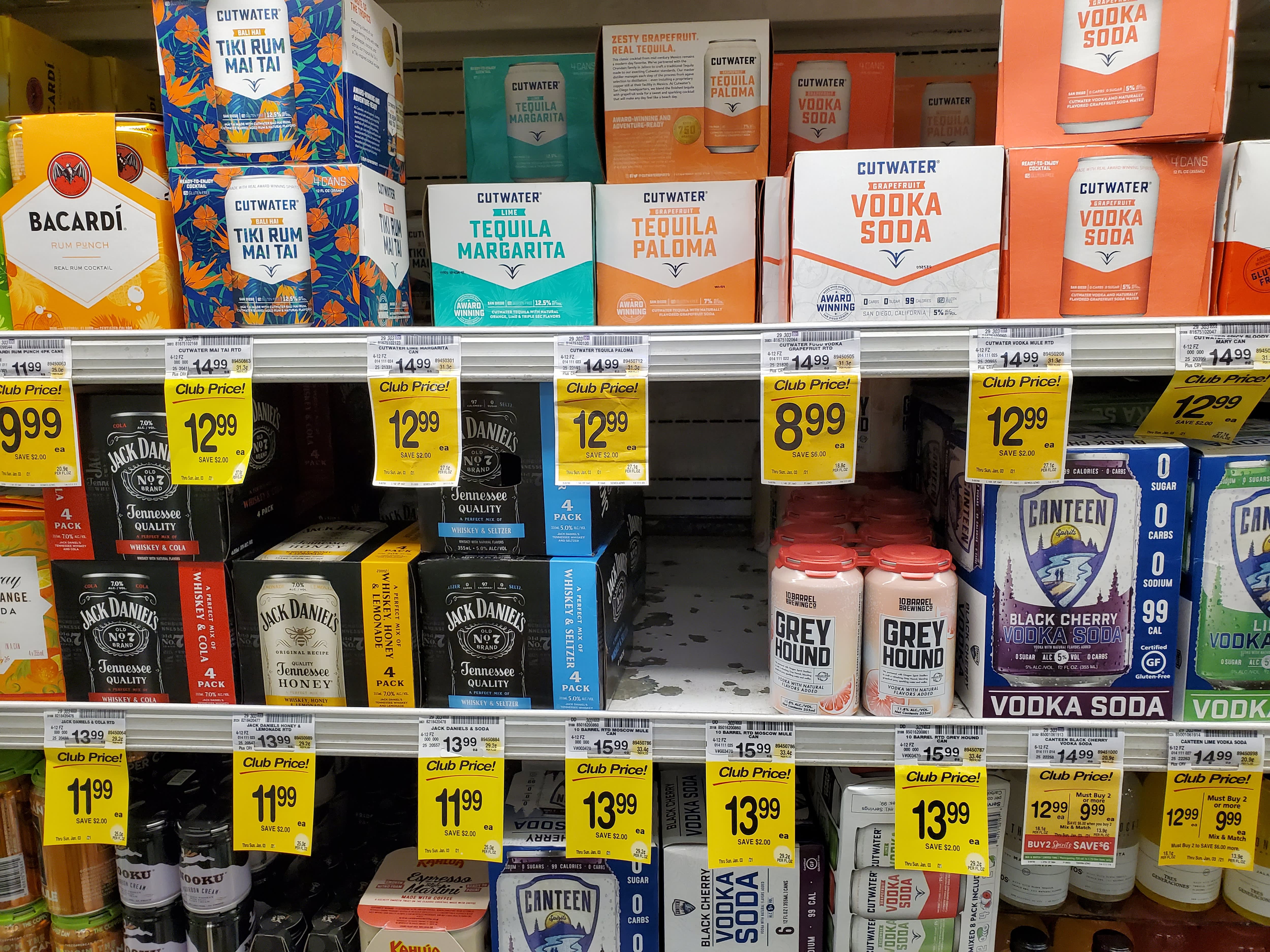
Close-up of discounted cans and cases of packaged cocktails on Safeway store shelves in Lafayette, California, December 31, 2020.
Smith Collection/Gado | Archive Photos | Getty Images

This summer's hottest cocktail comes in a can.

Between 2019 and 2020, the premixed cocktail category grew by 50% in the United States, according to industry tracker IWSR. The segment is still relatively small, accounting for only 3% of U.S. spirits volume, based on data from the Distilled Spirits Council of the United States. But companies and industry experts expect huge growth after its pandemic boom. Bank of America Securities is forecasting that the category will reach $3 billion to $4 billion in revenue over the next few years.

The rise of hard seltzer has fueled the growing popularity of canned cocktails. Ready-to-drink vodka sodas or gin and tonics appealed to consumers looking for a stronger taste or more alcoholic drink, and the category has expanded with greater variety.

Like hard seltzer, canned cocktails appeal to consumers who choose their alcoholic drinks based on convenience and taste. However, ready-to-drink cocktails are usually more premium because their base is made from real spirits, not the sugar or malt found in hard seltzer or lemonade. A six-pack of hard seltzers usually sets consumers back about $10, which is also the starting price for a four-pack of canned cocktails.

Canned cocktails can also be harder to find outside of liquor stores because states regulate them differently than flavored malt beverages.

In a March report to clients, Bank of America beverage analysts picked Anheuser-Busch InBev and Diageo as two companies that will emerge as key players. For now, some of the standout brands are E. & J. Gallo's High Noon, Monaco, AB InBev's Cutwater Spirits and Beam Suntory's On the Rocks, according to analysts.

Alcohol giant AB InBev entered the segment in 2019 through its purchase of Cutwater, a San Diego-based craft distillery. Cutwater is the second-bestselling canned cocktail brand in dollar sales with a 10% share of the ready-to-drink cocktail space, based on IRI data from the 13 weeks ended May 9.

For the Budweiser brewer, the acquisition was a way to move into new categories as consumption of beer has been trending downward in recent years. Fabricio Zonzini, president of the company's beyond beer unit, said that his division's first priority is ready-to-drink beverages.

"I think that Covid was somewhat a propeller for ready to drink because it brought the convenience of the bar to your home," he said. "And we saw that growth. Thank God we had Cutwater."

Beyond Cutwater, AB InBev has also partnered with a Canadian distiller on Nutrl, a line of vodka drinks. Zonzini said that the company will test the beverages in the U.S. to appeal to consumers who want a more light and refreshing cocktail, similar to the flavor profile of a hard seltzer. Last year, the company released flavored vodka under its Natural Light brand, which could mean canned vodka cocktails from the brewer if the liquor sells well.

"If we see the results, if it connects the way that we believe, it opens up another door," Zonzini said.

Johnnie Walker owner Diageo is making its own push into the segment now. In April, it bought Loyal 9, which mixes vodka and lemonade together in a can. Before the purchase, it had already launched canned cocktail offshoots of Crown Royal, Ketel One Botanical and Tanqueray.

"The category has been doing really well. It's the fastest growing part of [total beverage alcohol] and is just accelerating fast," said Jay Sethi, senior vice president Diageo's North American convenience category.

Sethi said that consumers are starting to look for more premium canned cocktails, which means that they're willing to spend more as well.

It's not just the alcohol giants that are looking to gain from the growth of canned cocktails. Smaller upstarts like craft distillery Cardinal Spirits have put out versions as well.

Zing Zang, which has a cult following for its Bloody Mary mix, entered the alcoholic beverage market last year with its first line of canned cocktails. The move took several years as it perfected the recipes and found distributors that could easily transport alcohol, but the drinks are doing well so far, according to CEO Brent Albertson.

Albertson, who spent three decades at Diageo before joining Zing Zang, said that the company's market research found that 25 to 37 year olds were the target market for the drinks.

"They're not drinking it to get drunk," Albertson said. "They want to do it on boats, on golf courses. They want that convenience and portability."

Even as consumers flock back to their favorite bars, the canned cocktail trend isn't expected to fade away. Brandy Rand, chief operating officer of the Americas at IWSR Drinks Market Analysis, said that she's expecting more ready-to-drink beverages to show up on menus.

"Consumers like them and they also provide on-premise operators a profitable option when faced with capacity and staffing issues, tighter margins, and slimmer menus," Rand said. "Canned cocktails are also a great option for drinks-to-go in states where legal."

Adblock test (Why?)

The Link Lonk


May 29, 2021 at 08:30PM
https://www.cnbc.com/2021/05/29/hard-seltzers-popularity-propels-the-rise-of-the-canned-cocktail.html

Hard seltzer's popularity propels the rise of another summer drink—the canned cocktail - CNBC

https://news.google.com/search?q=hard&hl=en-US&gl=US&ceid=US:en
Why It’s So Hard to Fill Jobs in Certain States - The Wall Street Journal

In Both Fact And Fiction, The Truth Of Tulsa Is Hard To Stomach - NPR

hard.indah.link

The original cover of Jewell Parker Rhodes' novel, Magic City. Courtesy of Harper Collins

Courtesy of Harper Collins

In the early 1900s, Greenwood — a Black neighborhood in Tulsa, Okla. — was a thriving, successful, independent town. But on May 31, 1921, a mob of white people stormed the town, killing an estimated 300 people, burning down homes and businesses, and leaving thousands homeless. There are competing theories as to what ultimately incited what came to be known as the Tulsa Race Massacre — but author Jewell Parker Rhodes says it was likely related to the perception that Black people "shouldn't be educated, shouldn't be uppity, shouldn't be, enjoying this kind of success."

Parker Rhodes is an acclaimed novelist and children's book author whose work often involves African American history. Her adult novels have focused on Antebellum New Orleans (Voodoo Dreams) and the secret life of famed abolitionist Frederick Douglass (Douglass' Women). Her young people's fiction (Black Brother, Black Brother; Towers Falling; Ninth Ward) tackles nightmarish subjects, like racism, violence and disaster, without giving children nightmares.

Parker Rhodes had wanted to write about the Tulsa Race Massacre for years, but because the subject made some people so uncomfortable — including publishers — she had to wait for several years to finally publish her novel on the topic, Magic City. It's a fictionalized retelling of the events surrounding the massacre, and it's been reissued in recognition of the Tulsa Race Massacre's centennial observances.

So ahead of the 100 year anniversary of the tragic events in Greenwood, I spoke to Parker Rhodes about why the story still resonates, and how Tulsans are coping with the aftermath of a century-old trauma. This interview has been edited for clarity and length.


What was Tulsa, Oklahoma like in 1921?

At the time, Oklahoma was still a territory; it was not a state. Tulsa in particular was anti-union, anti-Black, anti-Native American, anti-Communist. And just before the Greenwood massacre, there was an incident in which a young Jewish man was lynched and burned. So this was a truly lawless city where people who held power and money ruled.

One theory for why the massacre happened is that the city actually wanted to put a railroad through Greenwood. So they figured, "What's the best way? Give me an excuse so we can destroy your community."

Using infrastructure to debilitate Black communities has gone on through the twentieth and the twenty-first century so far.

The incident that allegedly started all this violence was a rumored assault of a white teenager by a Black teenager. Except the young woman in question, Sarah Page, did not press charges against Dick Rowland; she insisted there was no assault.

Right. She was a white woman who said, "No, you are not going to use my gender, my body as an excuse to assault a black man." And as far as I know, in terms of history, that was a rarity.

After rumors of an assault spread, Dick Rowland was taken into protective custody. A mob of white men descended upon the jail; they wanted to lynch him on the spot. But something stopped them. What?

Black men who knew what it was to defend civil rights and civil liberties, most of them veterans, came to the courthouse and said, "Oh, no, you have to give him due process." And apparently somebody asked a young Black man, 'what are you doing with that gun?' And the fellow responded, "Well, I'm going to use it if I have to." Somewhere in there a shot was fired — no one knows by whom — and boom! That started the violence and the rioting.

But we should point out that the rioting was one-sided, right? It was whites rampaging through Greenwood, looting, then burning Black families' homes.

Yes. With no consequences. Interestingly enough, I remember being in Oklahoma when Timothy McVeigh was sentenced for his white terrorism action, for bombing the Murrah Federal Building in 1995; 168 people died in Oklahoma City. [McVeigh was tried and executed in 2001.] And now I've lived through the January 6 attack on the Capitol, and it seems as though the Justice Department is really pursuing the white terrorists who were involved in that. But the terrorists who, 100 years ago, destroyed Greenwood have never, ever been brought to justice. They have never even been named. And it's so typical that, in terms of getting justice for African Americans and other oppressed groups, that your story can go untold, ignored, not brought to justice until it affects more directly, you know, the master community.

Part of the reason Tulsa had so much racial tension was because Oklahoma, and Tulsa in particular, had a lot of Ku Klux Klan activity. I've been told that the Klan had been on the wane, but when Black World War l veterans returned home with firearms skills and a determination to press for their full citizenship, suddenly Klan membership quickly increased?

The only time I've seen the Ku Klux Klan was in Tulsa, Oklahoma, when I was doing research for Magic City. This was about 1984. I was so appalled!

My young daughter was with me. I did point out to her that there were men, women, white and of color, police officers who were protecting the right of assembly of the KKK. And that that was our country, you know, showing its commitment to the First Amendment. But we still need to show our commitment to uncovering the legacy of all the things that have happened to people.

You've mentioned that initially, this book had a hard time being placed with a publisher. And that when it was published in 1997, a glowing review that was slated for a Tulsa paper suddenly...disappeared?

That review never, ever was published. Later, when I met the editor of the Tulsa World, she said to me, "Oh, it's not personal." And I thought it was very personal, because we had had great evidence that Tulsa was still not ready to reckon with its racial history. A dear friend of mine who actually did a book review in the Arizona newspapers, she confessed to me after about a year that she had gotten hate mail. People were threatening her simply because she wrote a review about a fictional retelling of an actual incident that happened in Tulsa.

Some white people just wanted to forget or ignore that the massacre in Greenwood had ever happened. But we've also heard from some Black people who say they grew up in Greenwood and had never been told that story. Why?

The updated cover of Magic City, by Jewell Parker Rhodes. Courtesy of Harper Collins

Courtesy of Harper Collins

I think Greenwood is just now coming out of that sense of trauma. If you can imagine in the 1920s how vulnerable the community felt — and not only did they have the massacre to contend with, but afterwards, the White House put them in a tent city and made them have I.D. cards in order to go back and forth to work. They had an internment camp. So some people did not tell their story. Some told it in whispers. And some tried to bury and forget. All are natural responses to trauma.

We can't judge the trauma that people felt in the 1920s. Do you know what I mean? So that's why you had a lot of Black kids being raised in Greenwood who didn't know about the Tulsa massacre. They weren't told. It was harder to speak truth to power in the 1920s. Some did it, but we can't begin to guess at the trauma and the fear.

Does this centennial help or hurt people still coping with the aftermath of Greenwood, generations later?

If it could be fixed with one memorial, one celebration, we would have all of our problems fixed so easily. I think it's going to take a lot more hard work. But I think now that the voices have been raised, that art is being created, we will at least be able to say that Greenwood will never, ever be forgotten. That it is a story that has had its time to be felt and heard, and it will continue to resonate.

Adblock test (Why?)

The Link Lonk


May 29, 2021 at 05:00PM
https://www.npr.org/sections/codeswitch/2021/05/29/1000351028/in-both-fact-and-fiction-the-truth-of-tulsa-is-hard-to-stomach

In Both Fact And Fiction, The Truth Of Tulsa Is Hard To Stomach - NPR

https://news.google.com/search?q=hard&hl=en-US&gl=US&ceid=US:en

Featured Post

I’m torn by the hard hat v graduation cap debate. Is it wrong that I want my kids to go to university? | Emma Brockes - The Guardian

hard.indah.link [unable to retrieve full-text content] I’m torn by the hard hat v graduation cap debate. Is it wrong that I want my kids to...

Popular Posts