Since the early days of White Claw, hard seltzer has only continued to proliferate. Brands like Spindrift and Bud Light have launched their own varieties, seltzer bars have opened around the country, and there’s a whole traveling festival dedicated to spiked sparkling water. So it was only a matter of time before someone in Portland — a city known for its beverage scene, be it coffee or booze – would develop their own brand.
That someone was Adam Milne, the man behind Old Town Brewing; he and the brewers at Old Town started selling their line of hard seltzers, Upper Left Seltzer Co. (no relation to the cafe of the same name), in September, available at the brewery, Baby Doll Pizza, and Zupan’s. The company launched with only two flavors: Key lime pie and cotton candy.
When this news first broke, I’ll admit I winced at the premise (I even wrote the headline “A New Portland Company Is Making Cotton Candy Hard Seltzer, Whether You Like It or Not” on September 17). I’m not someone who is inherently anti-hard seltzer; I’ve been known to partake in a White Claw from time to time. But the premise of drinking what is essentially concentrated, floss-ified sugar, melted down with some sort of ethanol, didn’t exactly appeal. Then again, I’m an adventurous woman; I’ve consumed my fair share of moonshines and backyard booze that very well could have left me paralyzed or dead. So when Upper Left — perhaps in response to my slightly snarky headline — sent me six cans of seltzer, I thought, cotton candy hard seltzer can’t hurt me, right?
I cracked open a can of the cotton candy hard seltzer on a Wednesday afternoon. It smelled like almost nothing, offering the slightest whiff of a cotton candy Dum Dum. On the palate, it is not exactly cotton candy — a closer relative may be blue raspberry Laffy Taffy, chewed near an open bottle of nail polish remover. Over time, however, the initial sweetness subsides, and it transitions into that classic hard seltzer flavor, sort of like a mix between vodka and turpentine.
The brand’s other flavor, Key lime pie, smells more like graham crackers and vanilla than Key lime, though there’s a whisper of citrus there; yes, I’m sniffing the can as if it’s a glass of 2015 pinot noir, which my coworkers rightfully mocked me for on a Zoom happy hour. On the palate, however, this is the clear winner: It allows for more layers of flavor, and it doesn’t taste like I stole a handful of lollipops from a pizza place after a frat party. Initially, it tastes similar to a Key lime LaCroix but mixed with a clarified milk punch, before that classic hit of ethanol pops in to remind you not to drink six in the middle of your workday, Brooke.
The cotton candy doesn’t taste nearly as sweet as the Key lime pie — perhaps this has to do with the sort of condensed milk-vanilla relative in the Key lime pie flavor, or perhaps that natural fragrant sweetness the Floridian citrus is known for. That being said, there is still something overwhelmingly uninviting about cotton candy-flavored seltzer. So what is it about the Upper Left cotton candy flavor that turns me off? Is it my preconceived notion of what cotton candy seltzer would taste like?
Let’s take a minute to think about seltzer. Mineral water culture — sparkling water, unadulterated by superfluous flavors or juices to let its natural components and terroir shine — is having its culinary moment in the United States, with water sommeliers in high-end restaurants and glass bottles from every corner of the world in specialty store aisles. For many connoisseurs, mineral water is the next level, after using a flavored seltzer as your entry point. In Punch, beverage writer (and Portlander) Jordan Michelman argues that the seltzer renaissance in 2019 was simply a stepping stone on the path to a rediscovery and reimagining of mineral water. “My own avid consumption of La Croix, which is just filtered tap water that’s been force-carbonated and flavored, had become reflexive, habitual, desultory—a drink to drink when I didn’t feel like using my brain, the water equivalent of ordering a Starbucks coffee,” Michelman writes. “The seltzer boom (and likely impending bust) has opened a door for us to reconsider what mineral water is, and who it should be for.” He compares high-end, “fine water,” as it’s called, to natural wine, or natural-process coffee, two beverages that have grown in popularity among those who are exploring the boundaries and definitions of certain drinks we thought we knew. All three beverages, however, are also tied up in a fixation on the natural: letting a product exist as close to its original form as possible.
But there’s a possibility that Upper Left’s choice to go with saccharine flavors was a deliberate rejection of the pretense surrounding how we eat and drink, because in a world where everything feels terrifying and scary, people seem to be seeking comfort. In 2019, Rachel Sugar wrote about the fixation on naturally sweetened seltzers for Vox, specifically the rising appeal of Spindrift, with its emphasis on “real ingredients” — a nod to the overarching cultural shift away from low-calorie food and beverage in favor of “wellness.” But years later, Sugar isn’t sure people are focused on what’s in their food or drink in the same way; rather, people seem to be seeking respite from the constant fixation on health and restriction. “Flavored seltzers, the whole beverage market, everything is about pretending you don’t want the thing that you want,” Sugar told me. “Part of the nostalgia is not just that it’s cotton candy, but that when we ate cotton candy as kids, it was garbage, and the garbage-ness was okay. What it brings up in terms of simplicity or looking back — it’s fun to enjoy things without that valence or morality.”
Upper Left Seltzer Co. is unabashed in its acknowledgement of the seltzers’ hyper-artificial flavors; in fact, it’s part of the schtick. “When we first started conceptualizing a new craft seltzer brand, we knew we wanted to create something that of course, tasted incredible, but also evoked a feeling of nostalgia and fun. There are tons of fruit and herbaceous flavored seltzers on the market, so (we) went with something completely different,” Milne says in a press release. That same press release describes the flavors as “inspired by the retro confections and local pop-stores of the 1970’s, married with pure ingredients and light, crisp flavors,” saying the seltzers “celebrate the nostalgic feeling of biting into your favorite salt-water taffy.”
It’s not that an artificial or sugary flavor is inherently bad, in a hard seltzer or in any other beverage. It’s that a hard seltzer, at its core, needs to be able to cover up the flavor of whatever unnamed, unclassifiable alcohol gives it that 5 percent ABV. The Key lime pie offers a balance of different flavors that successfully distract from the mystery spirit behind the curtain. The folks at White Claw have figured out how to introduce just enough lime, or mango, or watermelon to distract from the booze. Cotton candy is nothing but colored sugar, spun with air to create aesthetically silly, uncomplicated fun. Hard seltzer, similarly, is more about the story it provides than the sum of its parts: a low-calorie mixed drink, a “guilt”-free way to pound drinks all night. By producing a cotton candy seltzer, Upper Left doubled down on the illusion of a good time, without actually paying attention to what went in the can. After drinking it, I felt the way I usually feel after eating cotton candy: a little sick, kind of headache-y, and ready to lose the aftertaste.
October 02, 2021 at 01:45AM
https://www.montrosepress.com/news/outdoors/outdoors-hybrid-deer-hard-to-spot/article_d4e8583c-224d-11ec-9d12-6bd7b2b08c4b.html
OUTDOORS: Hybrid deer hard to spot | Outdoors | montrosepress.com - Montrose Daily Press
One afternoon a few Octobers ago, I sat with a friend from Spain at a picnic table in an idyllic orchard 50 miles northwest of New York City.
As our significant others scoured the farm’s various other goods (jams, butters, donuts), the two of us admired the vast green-and-red foliage blanketing the hills in the distance. Beside us were net bags filled with the dozens of apples we had collected by hand from the property’s dozens of rows of trees — a ritual and scene familiar to many Americans. My friend looked at the bags and gestured toward the sprawl of plants behind him. As enjoyable as the day had been, he found the activity a little weird. “In Spain, we have a lot of fruit,” he said of Europe’s top produce exporter. “But we don’t have anything like this.”
Through fresh eyes, the whole thing indeed seemed strange. Quality apples are generally easily available at grocery stores, and it’s not as though such heavily romanticized traditions are built around gathering other foods. (To wit, a 2015 New Yorker cartoon depicted a family picking apples with the caption: “Maybe next time we can go mine our own salt.”)
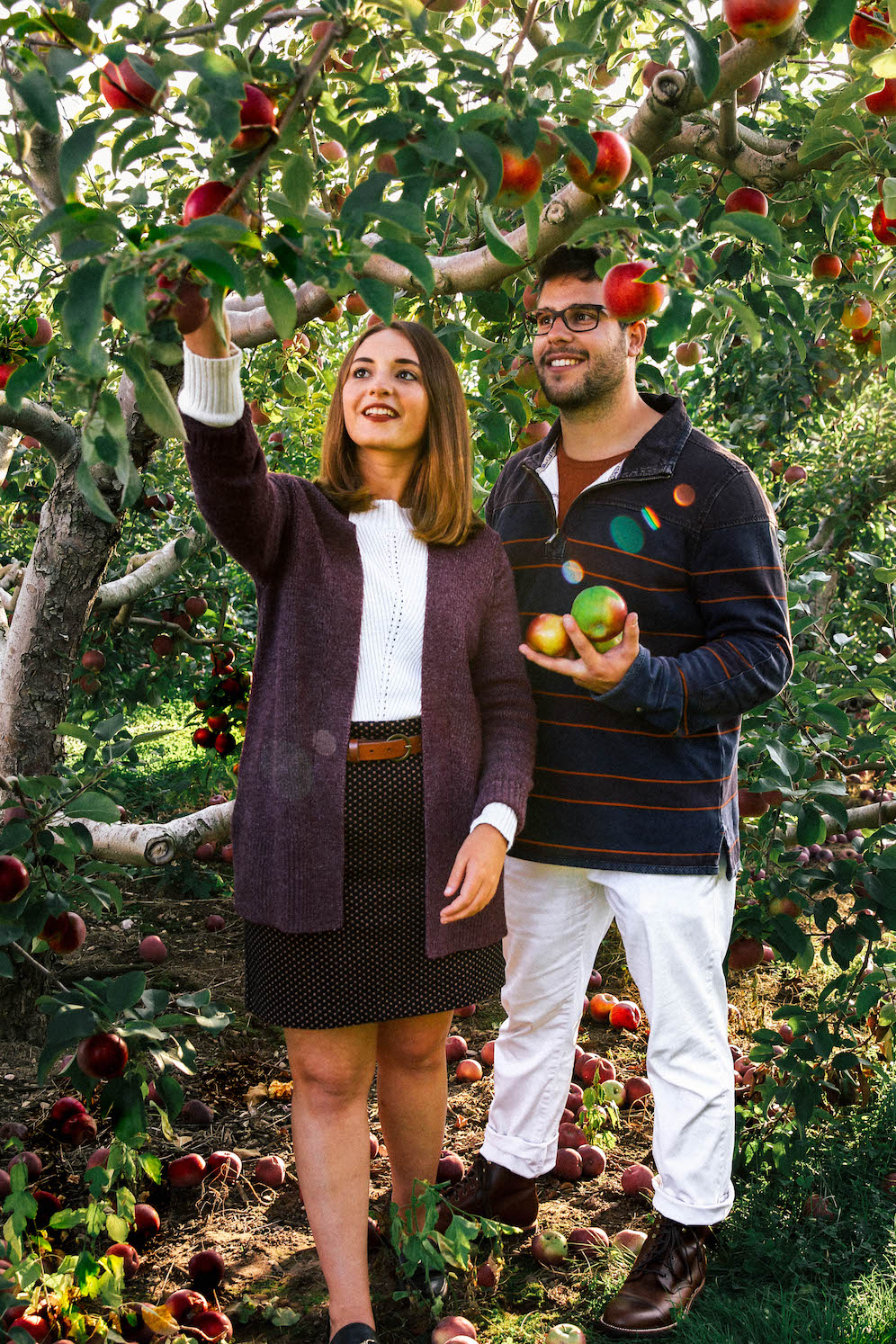
Yet apple picking has become an essential, Instagram-friendly element of America’s ever-expanding autumn industrial complex, alongside cable-knit sweaters and pumpkin-spice-everything. It’s a central seasonal activity among many American farms’ so-called “agritourism” or “agritainment” offerings, including hayrides, corn mazes, and petting zoos; between 2012 and 2017, the total US agritourism industry grew 35 percent to nearly $950 million a year. Farms from Washington state to Anchorage to the New Mexican desert fringe and beyond allow visitors to pick their own apples, a practice that’s become the subject of annual online guides (What to wear! What to post! How to actually make use of your bounty!) and SNL parodies (“Come cosplay outdoorsiness with us”). Conan O’Brien once even took Mr. T.
The practice defies the prevailing shifts of modern American society and its endless push toward the efficient, frictionless, and remote. At a time when so many activities are mediated through devices, picking apples offers a tactile pastime without any pressure for productivity.
For city-dwellers like my Spanish friend and me, it offered an excuse to leave our hurried urban confines for an expansive environment where time seemed welcomely slow. We watched a parade of flat clouds float over the valley. We tracked a bristly lump of a caterpillar creeping its way between gourds. We ate cider donuts, petted some goats. The picking offered a purpose to our afternoon escape, but only a loose one. That none of us expected to actually eat all the apples we had tucked into our bags was beside the point. The fruit had already given us a day of deep breaths of clean air under an open sky.
Our experience that day, like those of thousands like us each year, obscures harsh truths about how most of the approximately 30 billion apples grown annually in the US get picked. At large, commercial orchards, picking is no stroll spent watching insects inch around. It is done rapidly and tactically — often with multiple fruits grasped with each swipe of the hand — at a grueling pace that can make for staggering scale. “If you are an experienced picker and you’re in good physical condition ... you should not pick less than 12 boxes in a day,” one professional told NPR in 2015 — a “box” being a container that holds about 1,000 pounds of fruit. Climbing and balancing upon ladders, even in adverse weather, can leave workers prone to spinal and musculoskeletal injuries, says Elizabeth Strater of United Farm Workers, as well as expose them to potentially dangerous pesticides.
Steve Scott, a migrant worker from Jamaica, reaches for a jonamac apple at Ricker Hill Orchard in Maine in this 2017 photo. Farm tourism as a leisure activity grew in popularity as America industrialized.Ben McCanna/Portland Press Herald via Getty ImagesWorkers pick gala apples at the Rasch Family Orchards farm in Grand Rapids, Michigan, in 2017. An estimated 30 billion apples are plucked in the US each year. Agritourism has brought in new revenue sources for farmers.Daniel Acker/Bloomberg via Getty Images
This reality contrasts sharply with Instagrammed images of leisurely orchard strolls on leafy, sun-kissed weekends. Many professional apple pickers are migrant workers, often from outside the US. A substantial share are brought in through H-2A visa programs. According to the Atlantic, Washington state — the nation’s leader in apple production — increased its use of such workers by 1,600 percent between 2006 and 2016.
For decades, Northeastern orchards, too, have relied on seasonal laborers from Jamaica. Though many of these workers earn more money than at home, the Southern Poverty Law Center has likened guest worker programs such as H-2A to a modern form of slavery. Workers required to remain at their jobs to remain in the country can be without recourse or leverage when enduring harassment and other forms of mistreatment. Undocumented workers, whose immigration status is even more tenuous, have even less standing.
“The apex labor issue on any farm in the US right now is immigration,” says Strater. “Any worker that is undocumented or living in a mixed-status community is that much more likely to be exploited.”
All the while, apple pickers wrestle with problems common to even US-born workers, such as compensation. A 1990s dispute over pay in Washington grew so dire that the United Farm Workers and the Teamsters — once heated rivals — considered organizing the industry jointly. (The unions’ union did not come to fruition.)
These issues add a special absurdity to the optics of tourists paying to do labor for which professionals are so meagerly paid. Over the last 150 years, however, a gap has been forged between the apple’s gathering and its consumption. The ways America picks its most popular fruit, and why, are a product of changes in where Americans live, how we farm, how we have fun, and how we see — and perform as — ourselves.
In the early 1900s, there were around 14,000 varieties of American apples; industrialization quickly changed that.Creative Touch Imaging/NurPhoto via Getty Images
Like pigs, Malus pumila arrived in North America by boat in the middle of the last millennium and promptly ran wild. The species from which all of today’s commonly consumed apples descend, it was first domesticated in Kazakhstan and eventually came to Europe by trade. Its seeds were among the many that early European colonists brought to Virginia and New England in hopes they might take hold. “It was kind of a crapshoot,” says John Bunker, an apple historian based in Maine.
The pumila apples, much like the four native North American species often lumped together as “crabapples,” thrived in their new environs. Soon, the continent was developing thousands of its own varieties, like the Newtown Pippin, so beloved by Thomas Jefferson that he requested James Madison ship “a few barrels” to Paris during his time there in the 1780s. The next century birthed an American apple legend in John Chapman, a ragtag, enterprising preacher who planted small orchards on Midwestern land in order to stake a claim to it, then sold the plots to settlers. Chapman’s efforts, often distorted, later enshrined him in the young country’s lore as Johnny Appleseed.
Chapman’s orchard gambit succeeded thanks to the popularity of cider, the preeminent alcoholic beverage of the United States at the time. Easily made and in some cases safer to drink than water, cider was drunk prodigiously and widely. (Michael Pollan has described Chapman as “an American Dionysus ... bringing the gift of alcohol to the frontier.”) Meanwhile, imported traditions and local practicality were making apples a staple component of American diets through pies, preserves, and other dishes. It became a staple, too, of the country’s burgeoning cultural identity. Fairs featured apples in contests. Harvests became occasions for local celebration. Thoreau, in a lengthy treatise, anointed them “the noblest of fruits.” This agricultural alien came to be seen as inseparable from its new land. Emerson declared apples “our national fruit,” gushing that “the American sun paints itself in these glowing balls.”
But the Industrial Revolution began distancing Americans from their apples. The fruits’ region-specific diversity — the USDA once cataloged around 14,000 American varieties — consolidated as railway shipping allowed growers to sell to far-flung areas, and national standards often replaced local stocks. The shift toward industrialized, urban economies pulled most Americans away from farms and orchards altogether. By the late 1800s, historian Dona Brown writes in Inventing New England: Regional Tourism in the Nineteenth Century, many were so removed from the rural settings that had once defined American life that they began venturing to them for weekend and summer getaways. Such tourists, Brown writes, “were in a position, perhaps for the first time, of being able to envision the countryside as a playground, rather than as a mass of conflicting obligations, restraints, and memories.”
By the middle of the 20th century, orchards began welcoming visitors for other reasons. World War II-era labor shortages inspired growers to solicit volunteer picking help from nearby families, former Girl Scouts, and professional baseball teams. Operations also sometimes invited locals to help scoop up their scattered remaining crop at the end of harvest season. Enterprising outfits noticed their guests’ joy and recognized an opportunity to charge for the pleasure; others, facing further worker shortages in the 1960s, capitalized on the same appeal as old New England farm tourism for a new way to convert their crops to cash. The so-called “U-pick” sector was born. Soon apple-picking season became such a public event that majornewspaperheadlinesregularlyalerted readers to its arrival.
For many smaller growers, the sector became a lifeline. Industry consolidation has made it harder to compete with massive producers’ economies of scale, thinning the margins on wholesaling to stores and distributors. Direct, on-site sales to visitors allowed orchards to restore their margins while saving on labor and shipping costs. It also lured an audience for other farm products and attractions that could boost the bottom line.
“The wholesale was a lot of work without a very good return,” says Bill Dodd, a former Apple Grower of the Year, whose Hillcrest Orchards in Ohio began offering U-pick in 1997 and pivoted fully to the model within a decade. “This was still a lot of work, but the return was much more viable.” In retrospect, Dodd says he can see how he witnessed the demand for agritourism grow in his own Midwestern life. “When I was a kid, everyone had a grandparent or an uncle or some family member that was still farming, to some degree, so they had a family farm to go to,” he said. “Fast-forward 35, 40 years, most of the small farms are gone. They’ve been gobbled up by bigger ones. People just don’t have that option. They’ve gotten pretty far removed from their food source.”
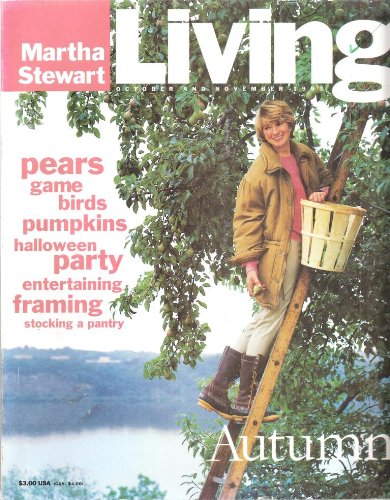
America’s embrace of apple picking may have been aided by its accelerated promotion of autumn as what Jezebel’s Hazel Cills, in “How America Invented the White Woman Who Just Loves Fall,” described as “a season for the nation to collectively get nostalgic for its own beginnings.” Twentieth-century cultural arbiters from Norman Rockwell to Martha Stewart helped fashion the season’s trappings into a celebrated aesthetic of rustic simplicity. Activities like apple picking, Cills wrote, allow “white-collar city dwellers to play-act a pastoral fantasy.” (As Cills notes, much of this aesthetic is rooted in a nostalgia for the whiteness of a certain era.)
Visitors wearing protective masks pick apples at Owen Orchards in Weedsport, New York, in September 2020. Amid the pandemic, apple picking became a hot fall activity — thanks to being outdoors, mostly socially distant, and highly Instagrammable.Bloomberg via Getty Images
In the social media era, this phenomenon has grown common enough to inspire tropes such as Christian girl autumn, Mr. Autumn Man, and “Fall is my Whole Personality!” sweatshirts. For people looking for fresh, relevant environs to showcase themselves, seasonal settings like apple picking can offer a solution with additional benefits.
“Influencers have to toe this line between aspirational and relatable,” says Cornell professor Brooke Erin Duffy, who studies social media and promotional culture. “Apple picking and these other rustic activities fit very neatly into this. It’s a beautiful, stage-worthy backdrop and always looks fun, but they’re not at the five-star restaurant or drinking fancy champagne or whatever it may be. A key part of it is that it straddles various class positions.”
“It’s not like you go and are like, ‘I’m gonna emulate these photos,’” Duffy says. “But they become part of the popular imagination. It reaffirms this as an activity — as something to do.”
As many an Instagram scroller could tell you, picking apples seemed especially like something to do last fall. With most indoor recreation barred in large swaths of the US due to the Covid-19 pandemic, many saw outdoor entertainment as especially attractive. Dodd, the apple grower in Ohio, saw turnout to his orchard increase upward of 20 percent. “We had the best year we’ve ever had,” he says. “Ridiculous numbers.”
To some, the optics also lent themselves to the pandemic’s fraught social conditions. Duffy notes that, at a time when many influencers were scolded for risky behaviors amid a highly contagious viral outbreak, an orchard trip — outdoors and generally socially distant — allowed a poster to “perform for a public audience in a way that is less likely to generate critical blowback.” Also, she points out, day-tripping apple pickers were “not showcasing excessive levels of consumption and capital at a moment when the economy is collapsing.”
U-pick farms have turned apple picking — the hard work of farming, really — into a contrived exercise in nostalgia, complete with tractor rides, cider, and faux labor.Bruce Bisping/Star Tribune via Getty Images
For those who pick for their living, the past year and a half also brought changes. Undocumented farm laborers were among those officially labeled “essential workers,” a status of predictable hollowness: a letter from the federal government permitting violations of stay-at-home orders, but no actual protections against deportation. In March, Congress passed the bipartisan Farm Workforce Modernization Act, which would provide paths to legal residency for undocumented agricultural workers and establish new protections for those in the US on H-2A visas. (The bill has not yet been voted on by the Senate.)
Less hospitable have been longer-term global trends. The relentless heat waves caused by climate change have forced some harvesting to be done at night, when Strater, of United Farm Workers, says workers in the Pacific Northwest must contend with hazards like rattlesnakes. (Strater also says that some parents, lacking child care at such hours, bring their children to the fields.) Then there is the advent of apple-picking robots, which debuted stateside in 2019, drafting yet another battlefield in the escalating war between human labor — and the jobs it provides — and automation.
For most casual apple pickers, such developments are unlikely to be given much thought. But the further erosion of human connection to American apples aligns with the post-industrialization trends that helped cast apple picking as leisure in the first place. By now, the activity is firmly rooted in a culture where sensory, tactile “experiences” (and the performance thereof) seem positioned to retain or even grow their allure.
The social and personal forces that have for decades been propelling millions of Americans to spend their free time hand-selecting their own apples are not going anywhere. Animating it is the same simple idea that ultimately made my Spanish friend — a stranger to Martha Stewart, free of Americana’s contrived nostalgic pull — an easy apple-picking convert: Sometimes it’s just nice to get away from everything, and even better to come back with something sweet.
Retiring seems like an overwhelming prospect — because it is.
You’re trying to save up enough money to last the rest of your life, including uncovered health costs, and you’re not exactly sure how long you need to save for, because, well, you don’t know how long you’ll live.
But don’t panic. While the numbers are big, if you take things in steps and use the tools available, it’s doable.
Expenses drive everything, Robert Powell, co-founder of Finstream.TV, editor of Retirement Management Journal and a MarketWatch columnist, said in an interview during MarketWatch’s Mastering Your Money event, which examined saving, spending and investing and the impact that COVID-19 had — and will have — on our lives.
Robert Powell of FinStream.TV chats with MarketWatch retirement editor Angela Moore about tips on determining when and where to retire, how to handle healthcare and other expenses -- and how to avoid outliving your money.
Get an idea of your expenses
People should start off by determining what their expenses will be in retirement, but Powell acknowledges that it isn’t an easy task.
“What your expenses will be in retirement is actually a hard question to answer, in part, because you don’t know how long you need to fund your retirement, you don’t know your date of death…if you knew your date of death I could build you a perfect retirement plan,” he said with a laugh.
However, one place to start is by assuming you’ll have a long life. Powell suggests people “plan” to live to age 90 or 95, and that could mean a 30-year retirement.
One way to estimate what your costs will be is to “ballpark it” and set a budget of 80% of your preretirement income, or a better strategy, Powell said, is to use a spreadsheet or budgeting tool to figure out more precisely what your spending will be — keep in mind that you’re likely to spend more in the early years of retirement than you do in the later years.
If you’re married, make sure that financial plans include enough money to cover the expenses of a surviving spouse in the likely case that one of you will die first.
Save, and then save some more
Save aggressively, and constantly monitor whether you’re reaching your goals, so you know if you need to save more, invest more aggressively, or work longer. “You’re going to be constantly monitoring and adjusting your plan as you go,” Powell said.
What about working longer as a way to fund your retirement years?
“It’s good advice because most people are behind the 8-ball,” Powell said. “[Only] half the people who say they plan to work longer into retirement are able to do that — they suffer the loss of a job, a healthcare shock, they have to become a caregiver. So telling someone to work longer is a great plan, but if it’s only a coin-toss whether you’ll be able to work longer, you’d better have a backup plan to your backup plan.”
Staying healthy isn’t cheap, but it’s manageable
Then there’s the ever-rising cost of healthcare in retirement. Fidelity Investments said earlier this year that a 65-year-old couple retiring in 2021 would be facing roughly $300,000 in out-of-pocket healthcare costs over the rest of their lives.
An eye-popping number like that makes most of us feel hopeless, Powell said. “Most people don’t even have that much set aside in their 401(k), so how in the world would they be able to fund those kinds of expenses in retirement?”
The key is not to think about it as a lump sum that you need to have on hand at age 65, think of it as an annual expense.
There are different types of healthcare costs, he pointed out. Some of those expenses are predictable, and could be paid from sources of income like Social Security, while unpredictable expenses might be paid through assets, so you might spend $5,000 a year if you’re single, maybe $10,000-$12,000 if you’re a couple.
Investors should set aside up to 15% of what they’re saving for retirement and earmark it for healthcare expenses. “Then I think you’ll be fine, because healthcare expenses represent an increasingly large portion of a person’s budget in retirement and healthcare expenses can escalate at a rate of twice the average cost of living.”
Powell said health savings accounts (HSAs) are a good way to set aside money for healthcare in retirement. If you have access to one at work he advises funding it and not tapping into it now, instead letting it grow for future expenses and invest it as you would an IRA or a 401(k). (Note you must have a high-deductible health plan to be eligible for a health savings account. Read more about the rules for HSAs.)
If you’re not sure which investment vehicle to fund first, Powell has this advice:
“If you have a company that provides an employer match on your 401(k), obviously fund that to get the full match, that’s free money. And then after that start funding your HSA to the fullest amount possible, and then once you fund that and there’s money leftover then think about going back to your 401(k) and trying to max out.”
When it comes to spending the money you’ve saved up in retirement, how do you know how much you can spend? This is called decumulation and it’s a hot topic in retirement circles. A popular rule of thumb is the 4% rule, which essentially says you can withdraw 4% of your portfolio each year of retirement and never run out of money. Not everyone is a fan, including some of the rule’s creators and Powell, who says it’s no longer valid.
“What you’re doing is relying on risky assets to generate income for what oftentimes is an essential need,” Powell said. “I’ve become a fan recently of the bucket approach…because it guarantees the possibility of you having exactly the amount of income you need to fund the next two or three years of retirement.” Powell wrote a helpful column about the bucket strategy, read more here.
When Rexanah Wyse and Eric Morrissette started dating in 2018, they discovered that they shared core similarities — and some differences, too.
Soon after he began dating Rexanah Wyse, Eric Morrissette began receiving text messages that he found suspicious.
The messages would arrive early in the morning, around 4 or 5 a.m. They were from Ms. Wyse. Her texts would always convey some kind of positive message, something like, “Good morning, today’s a great day for a great day, you’re a wonderful person, you’re a champion, you’re going to help so many people today — we love to see it.”
To Ms. Wyse, these texts were instinctual, a way to give Mr. Morrissette a boost. “I wanted the first thing he would see to be a positive text message to start his day,” she said, “and to remind him of how wonderful and great he is as a human being on this planet.”
But to Mr. Morrissette, Ms. Wyse’s zeal was, at first, a little jarring.
“I’m a kid from Brooklyn,” he said, “so this level of positivity, it felt like, ‘Is this person trying to shake me down?’”
Ms. Wyse and Mr. Morrissette had started dating in January 2018. They met through the dating app OkCupid, and had their first date at a chic sushi restaurant in the Cleveland Park neighborhood of Washington. They made an impression on each other quickly.
“You’re beautiful and you’re thoughtful and you’re smart,” Mr. Morrissette remembered thinking, “but you’re also so focused on your family.”
The two discovered that they share some core similarities. Their faith is one, their families’ immigrant roots, another.
“I’m a daughter of immigrants and Eric is a child of an immigrant,” Ms. Wyse said. “It provided comfort,” she added, “knowing that there is this shared tapestry of commonality that we have between each other.”
About two months into their relationship, Ms. Wyse experienced a difficult loss. Her paternal grandmother died. Ms. Wyse wasn’t sure that she could sustain a budding romance.
“I remember kind of pushing him away,” she said. “I’m like, ‘Eric I’ve got a lot going on, it’s cool, you can do your own thing.’ He’s like, ‘no, I’m here. I like you, I’m here.’”
The relationship could have struggled during this period. Instead, it deepened.
“I found myself focused on a person beyond my job that I cared about in a way that I hadn’t really before,” Mr. Morrissette said.
Both Ms. Wyse and Mr. Morrissette knew going into the relationship that they were looking for something long term. Sometime during the lockdowns of the coronavirus pandemic, that solidified.
“We’re getting married or we’re breaking up,” Ms. Wyse remembered saying, “there’s no in between.”
Mr. Morrissette proposed in December 2020 in his College Park, Md., home, where he had created something of an exhibition about their relationship — the walls were lined with photographs of their time together. He brought sushi from the restaurant where they had their first date.
Ms. Wyse, 33, the chief of staff of the United States Interagency Council on Homelessness, and Mr. Morrissette, 34, the director of legislative affairs for the U.S. Department of Commerce, were married Aug. 21 at the Mansion at Strathmore, an events space in Rockville, Md. The marriage was officiated by Representative Emanuel Cleaver II, Democrat from Missouri, who is a Methodist pastor, in front of about four dozen guests.
Ms. Wyse and Mr. Morrissette now live together in College Park, so there’s no need for her morning texts anymore. But if she were to, she’d find that Mr. Morrissette has rethought his initial suspicion about them.
“They changed my perspective entering the day,” he said. “No one had ever done anything like that for me.”
The hardest decisions are full of probabilities, gray areas and uncertainties. There is no way we can be certain in the midst of confusing and difficult moments, but we can do our level best to make the best decision we can with the information we have. Below are four steps we can take to help us make tough decisions:
Follow The Facts
Read the pertinent background information and listen to experts in the situation you find yourself in. Try and compartmentalize any feelings or biases you may have, and digest this information from as objective a place as possible. It’s important to understand the risks of your decision.
Consider Your Goals And Principles
Whether this is a professional or personal situation, you have to weigh this decision against your overall goals. For example, if you like your job but do not like your employer, you have to understand the risks of going to a competitor and what you might be giving up or leaving behind if change companies.
Discuss It With People You Trust
It’s important to have a core group of people you trust to consult with for difficult decisions, especially people who will tell you what you may not want to hear. They may have a fresh prospective that impacts how you weigh the decision, and it is important to ensure you have sound logic in your decision-making process.
Set A Deadline (If You Don’t Have One)
Almost as important as the decision itself is making the decision, and not letting time, other people or other events make the decision for you. Even if ultimately you make a mistake, it is better to make an active mistake than a passive one.