Rechercher dans ce blog

Wednesday, April 3, 2024

Steve Cohen says the Fed may have a hard time getting inflation down to its goal - CNBC

hard.indah.link

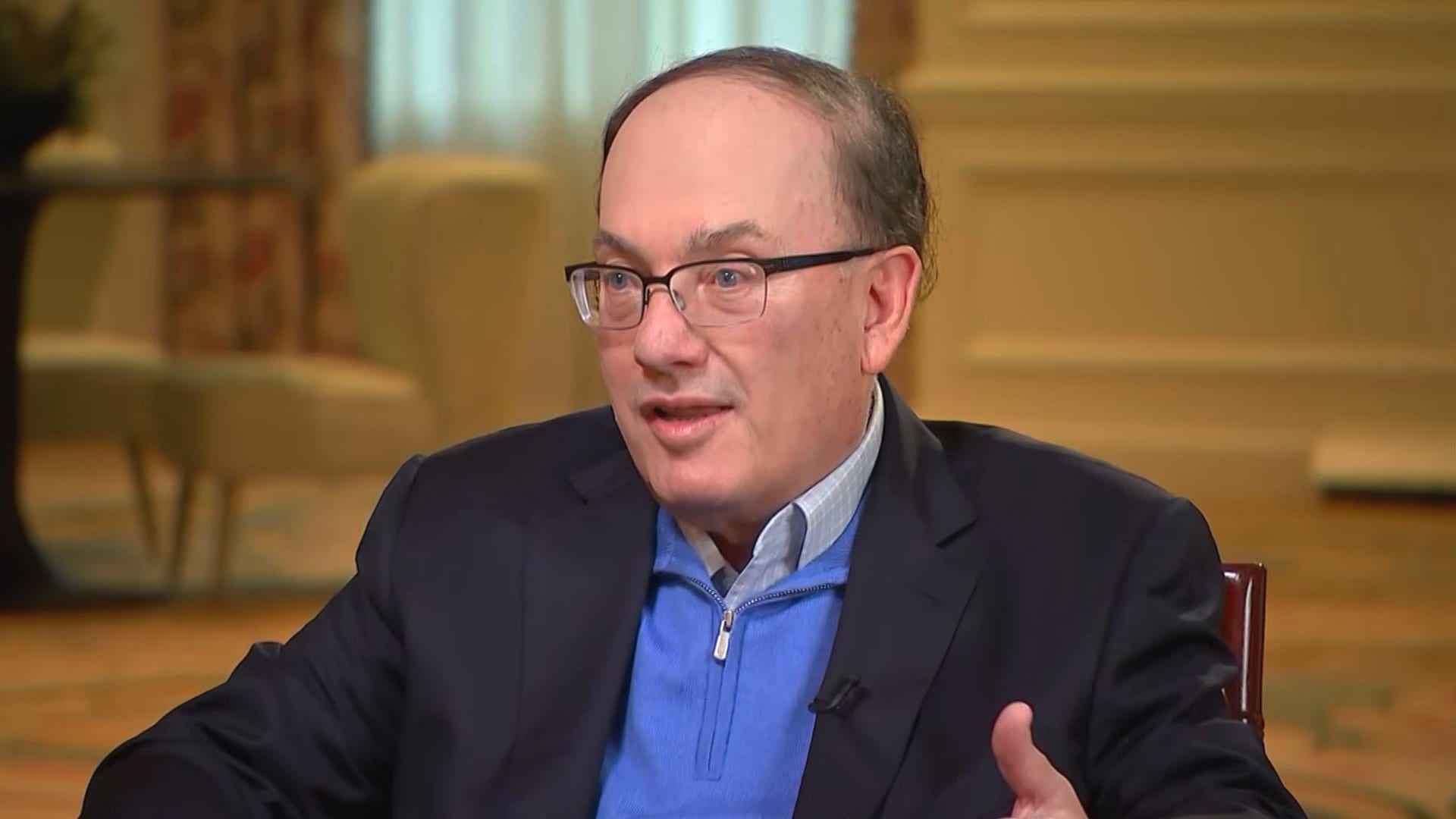
Billionaire hedge fund manager Steve Cohen said Wednesday that it will be difficult for the Federal Reserve to get inflation back down to its 2% goal.

"The Fed thinks it's eventually going to come down to a 2% inflation rate. ... I think that's going to be hard," Cohen told CNBC's Andrew Ross Sorkin on "Squawk Box."

Inflation was falling in late 2023, but there were several upside surprises in that data during the first quarter of this year. That has led to concern among economists and traders that inflation may prove to be "sticky" above the Fed's target level, complicating the path for rate cuts.

The Point72 CEO said Wednesday that there's a lot of "underemployment" in the country, which could create upward pressure on inflation if economic growth remains strong.

"If growth is too fast, then you start getting constraints on labor and wages go up, and that may be a problem. ... We're in one of these problems where I don't think many people know exactly what is going to happen," Cohen said.

Despite his concerns on inflation, Cohen said he doesn't disagree with market estimates of three cuts this year.

"I think inflation's been somewhat contained, and I think ultimately it will come down to: is that a true statement or not," Cohen said.

Cohen also expressed general confidence in the stock market. He said the current market rally is not a bubble like 1999's dot-com boom and is instead due in part to investors pricing in future growth from artificial intelligence.

Cohen said that AI is a "really durable theme" that will make an impact on a wide variety of companies.

"If you're a company and you're not thinking about this, you're going to wake up one day and go 'we're in trouble,'" Cohen said.

Cohen has a long history of successful stock trading, and he made much of his fortune as a hedge fund manager at S.A.C. Capital before the firm was shuttered after a regulatory investigation. He also owns the New York Mets.

Adblock test (Why?)

The Link Lonk


April 03, 2024 at 08:32PM
https://news.google.com/rss/articles/CBMidWh0dHBzOi8vd3d3LmNuYmMuY29tLzIwMjQvMDQvMDMvc3RldmUtY29oZW4tc2F5cy10aGUtZmVkLW1heS1oYXZlLWEtaGFyZC10aW1lLWdldHRpbmctaW5mbGF0aW9uLWRvd24tdG8taXRzLWdvYWwuaHRtbNIBeWh0dHBzOi8vd3d3LmNuYmMuY29tL2FtcC8yMDI0LzA0LzAzL3N0ZXZlLWNvaGVuLXNheXMtdGhlLWZlZC1tYXktaGF2ZS1hLWhhcmQtdGltZS1nZXR0aW5nLWluZmxhdGlvbi1kb3duLXRvLWl0cy1nb2FsLmh0bWw?oc=5

Steve Cohen says the Fed may have a hard time getting inflation down to its goal - CNBC

https://news.google.com/search?q=hard&hl=en-US&gl=US&ceid=US:en

Tuesday, April 2, 2024

Embittered Republicans plot to knock off House GOP’s hard-right leader in primary feud - CNN

hard.indah.link

Embittered Republicans plot to knock off House GOP's hard-right leader in primary feud

CNN's Manu Raju takes a look at Rep. Bob Good (R-VA) and why some Republicans plot to knock off the House GOP's hard-right leader in the Virginia primary feud.

04:33 - Source: CNN

Adblock test (Why?)

The Link Lonk


April 01, 2024 at 07:36AM
https://news.google.com/rss/articles/CBMiYGh0dHBzOi8vd3d3LmNubi5jb20vdmlkZW9zL3BvbGl0aWNzLzIwMjQvMDMvMzEvYm9iLWdvb2QtZ29wLWNvbGxlYWd1ZXMtdmlyZ2luaWEtcmFqdS1wa2ctdnB4LmNubtIBAA?oc=5

Embittered Republicans plot to knock off House GOP’s hard-right leader in primary feud - CNN

https://news.google.com/search?q=hard&hl=en-US&gl=US&ceid=US:en

Oregon recriminalises hard drugs after huge increase in overdose deaths - The Telegraph

hard.indah.link

Oregon has recriminalised hard drugs as officials admitted their strategy was a “huge mistake” after overdose deaths increased rapidly.

Those found in possession of substances such as heroin or methamphetamine now face up to six months in prison, after Tina Kotek, the Oregon governor, signed the measure into law.

Oregon became the first state in the United States to legalise small amounts of hard drugs, including the deadly opioid fentanyl, which was approved by a public vote in 2020.

However, enthusiasm quickly cooled amid a surge in rough sleeping and crime. In Portland, Oregon’s largest city, businesses have fled the downtown area, where shops are boarded up and homeless encampments are widespread.

A user smoking fentanyl in Portland, Oregon
Overdose deaths from opioids, including fentanyl, have almost doubled in some areas since drugs were decriminalised Credit: PATRICK T FALLON/AFP

Drug overdose deaths increased by about 44 per cent in 2021, according to state figures. The same year, a University of Toronto study concluded that the decriminalisation measure was responsible for 182 unintentional fatal drug overdoses.

Multnomah County, which includes Portland, declared a state of emergency earlier this year when overdose deaths from opioids, including fentanyl, almost doubled.

Ted Wheeler, the mayor of Portland, said that officials had made a “huge mistake” in decriminalising drugs without making sure there was a safety net for addicts.

“There’s no question that the state botched the implementation,” he told The New York Times.

“The timing couldn’t have been worse. In terms of the botched implementation: to decriminalise the use of drugs before you actually had the treatment services in place was obviously a huge mistake.”

Ted Wheeler, the mayor of Portland, said that officials had made a 'huge mistake' in decriminalising drugs
Ted Wheeler, the mayor of Portland, said that officials had made a 'huge mistake' in decriminalising drugs Credit: Nathan Howard/Getty Images North America

As part of the decriminalisation measure, bodies known as Behavioural Health Resource Networks received about $260 million in public money to support drug addicts.

Oregon is the latest liberal state performing a volte-face on its drug policies. Voters in San Francisco endorsed a move that subjected welfare recipients to drug tests in February.

Mr Wheeler claimed that voters had moved to the Right on drug policies because they “want order restored to their environment” and “are exhausted from feeling like they’re under siege”.

He continued: “You see it particularly amongst young people. I feel it. I think other people feel it, too.

“They have a minimum expectation that where they live is an orderly, safe, secure, prosperous place to be. And if they don’t see it, that is unsettling. They need to have that.”

A fentanyl user in Portland, Oregon
Homelessness rapidly increased in Portland, Oregon, since the measure was introduced Credit: James Breeden/Breeden Media LLC

While Mr Wheeler admitted that “addiction rates and overdose rates skyrocketed” since 2020, he argued that this was not totally a result of Oregon’s liberal drug attitude, citing the Covid pandemic and a lack of investment in health services.

Kate Lieber, a Democrat and majority leader in the state senate, insisted last month that the law needed more time to work.

“We fundamentally haven’t figured out how to have the behavioural health system and the criminal justice system really talk to each other,” she said.

‘It just wasn’t helping’

Portland Police Sergeant Jerry Cioeta said he wasn’t surprised by the decision to roll back decriminalisation, which was unsuccessful because the state didn’t have the “infrastructure” to support addicts.

“You know, it’s frustrating in the sense that we really want to help these people... and we saw that it just wasn’t helping”, he told The Telegraph.

“It wasn’t helping the addiction, it wasn’t helping the businesses, it wasn’t helping our community, it just wasn’t helping anything.”

He added: “The definition of insanity is hitting your head against the wall 100 times and expecting a different outcome... We’re just going to continue trying other things until something works.”

Adblock test (Why?)

The Link Lonk


April 02, 2024 at 09:44PM
https://news.google.com/rss/articles/CBMiZmh0dHBzOi8vd3d3LnRlbGVncmFwaC5jby51ay91cy9uZXdzLzIwMjQvMDQvMDIvb3JlZ29uLXJlY3JpbWluYWxpc2VzLWhhcmQtZHJ1Z3MtYWZ0ZXItb3ZlcmRvc2UtZGVhdGhzL9IBAA?oc=5

Oregon recriminalises hard drugs after huge increase in overdose deaths - The Telegraph

https://news.google.com/search?q=hard&hl=en-US&gl=US&ceid=US:en

Oregon makes hard drugs illegal again after decriminalization - Yahoo! Voices

hard.indah.link

Three years after becoming the first American state to decriminalize all drugs, Oregon has reversed course, making possession of even small amounts an offense again.

Governor Tina Kotek on Monday signed a law that will provide for up to six months in prison for anyone caught with hard drugs like fentanyl, heroin, cocaine or ecstasy, starting in September.

The reversal ends a three-year experiment that left police officers handing out $100 fines and cards with details on how users could get treatment for their addictions.

The plan was to treat drug use as an illness, rather than a crime, and was modeled on rules in other jurisdictions like Portugal, where decriminalization has been in place for two decades.

But the change coincided with a boom in the use of fentanyl -- a potent synthetic opioid that has claimed tens of thousands of lives in the United States through overdoses.

Critics say Oregon was too slow to establish the treatment centers it needed as part of its two-pronged approach to decriminalization.

The result was an explosion of unabashed drug use on city streets, resulting in sometimes fatal overdoses on sidewalks and in parks.

As the death toll grew, public opinion turned against the plan, and the state's left-leaning politicians reversed course.

But Kassandra Frederique, executive director of the Drug Policy Alliance, on Tuesday criticized the U-turn. She said it "abandons a health approach and reverts to the failed approach of treating drug possession as a crime."

"It’s a false promise of change that will cycle people through the criminal legal system with no meaningful connection to treatment," she added.

rfo-hg/bjt

Adblock test (Why?)

The Link Lonk


April 03, 2024 at 04:24AM
https://news.google.com/rss/articles/CBMiSWh0dHBzOi8vd3d3LnlhaG9vLmNvbS9uZXdzL29yZWdvbi1tYWtlcy1oYXJkLWRydWdzLWlsbGVnYWwtMjEyNDI5MTk0Lmh0bWzSAQA?oc=5

Oregon makes hard drugs illegal again after decriminalization - Yahoo! Voices

https://news.google.com/search?q=hard&hl=en-US&gl=US&ceid=US:en

Minnie Driver says 'Hard Rain' producers denied her a wetsuit while filming to 'see my nipples' - USA TODAY

hard.indah.link

Minnie Driver is opening up about the sexism she allegedly faced while filming the 1998 movie "Hard Rain."

Driver, 54, who starred in the film alongside Morgan Freeman and Christian Slater, made the revelation during Tuesday's episode of SiriusXM’s "I Weigh with Jameela Jamil."

The actress recalled being surrounded by "20 million gallons of water" for scenes "during this massive storm" and struggling with the physical intensity.

"There were huge rain machines. We shot crazy hours. It was tough, like it was a tough movie, but everybody else could wear a wetsuit underneath their costume," she said. "And I was told by the producers that I couldn't because they wanted to see my nipples and that there was no point in having the wet t-shirt if you couldn't have what was underneath it."

Minnie Driver alleged that while filming the 1998 movie "Hard Rain," producers denied her from using a wetsuit so they could see her nipples.

Driver said when she complained, she was ostracized. "People wouldn't speak to me on the set. … I was so punished for it," she claimed.

When her on-set resistance was "leaked to the press," it was spun as though she was just "complaining" over nothing.

Minnie Driver gives adviceto her 'heartbroken' younger self about Matt Damon split

"We shot that movie for seven months. So, eventually, you do turn on yourself. You do go, 'It was my fault for saying anything, you stupid big mouth. You should have shut up,'" Driver continued. "And that goes in and then alters the way in which you kind of see yourself and your natural inclination to put your hand up and go, 'This isn't right.'"

USA TODAY has reached out to representatives for film distributor Paramount Pictures and "Hard Rain" costume designer Kathleen Detoro.

Driver added that these days her outspoken nature is "celebrated" and described as "articulate," which she credits to a shift in Hollywood following the #MeToo and #TimesUp movements, during which people opened up about incidents of gender bias and harsh working conditions in the entertainment industry.

"I don't think I really ever did change," said Driver, comparing her current self to her early career. However, at the time, Driver said she was "punished" for being true to herself and had a "difficult time getting work."

Adblock test (Why?)

The Link Lonk


April 03, 2024 at 02:26AM
https://news.google.com/rss/articles/CBMid2h0dHBzOi8vd3d3LnVzYXRvZGF5LmNvbS9zdG9yeS9lbnRlcnRhaW5tZW50L2NlbGVicml0aWVzLzIwMjQvMDQvMDIvbWlubmllLWRyaXZlci1oYXJkLXJhaW4tZGVuaWVkLXdldHN1aXQvNzMxODA2NzgwMDcv0gEA?oc=5

Minnie Driver says 'Hard Rain' producers denied her a wetsuit while filming to 'see my nipples' - USA TODAY

https://news.google.com/search?q=hard&hl=en-US&gl=US&ceid=US:en

Monday, April 1, 2024

Oregon re-criminalizes small amounts of hard drugs after 2020 voter initiative is overturned - NBC News

hard.indah.link

Last month, legislators overwhelmingly passed House Bill 4002, undoing a key part of a voter-approved initiative that decriminalized small amounts of drugs.

Opponents of the bill, including treatment service providers and public defenders, said the new law marks a return to the failed war on drugs, which filled jails but did little to curb drug addiction.

Oregon voters overwhelmingly passed the decriminalization measure, known as Measure 110, in 2020. It reduced penalties for possessing small amounts of hard drugs and established a framework to help people access treatment services. 

“We were too progressive,” said Jovannis Velez, an outreach worker with Recovery Works Northwest, which operates treatment centers throughout Oregon. “Society wasn’t ready for it.”

Advocates of the original measure touted it as an opportunity to help people struggling with addiction get the help they need rather than face jail time.

Hundreds of millions of dollars of marijuana tax revenues were meant to go into drug treatment and harm reduction programs. But that didn’t translate into an improved care network for a state with the second-highest rate of substance use disorder in the country and ranked 50th for access to treatment, according to an audit report released last year.

Sarah Pulver, a Outreach Peer Specialist with BHRC, pulls out Narcan from her book bag
Sarah Pulver, an outreach peer specialist with BHRC, pulls Narcan out of her book bag during outreach rounds in downtown Portland, Ore., on March 18.Jordan Gale for NBC News

Services were difficult to access and were never fully implemented, frustrating lawmakers who opposed decriminalization from the start. Spikes in overdose deaths, largely driven by fentanyl use, and an increase in homelessness created a political backlash.

Opponents of the decriminalization bill argued that the pilot program had not achieved its intended results and had only worsened open-air drug abuse.

"Combatting a problem by decriminalizing the problem is bad policy," Oregon Senate Republicans said in a statement last month. "Never again."

Democratic Senate Majority Leader Kate Lieber, of Portland, one of the bill’s authors, said its passage would “be the start of real and transformative change for our justice system.”

“With this bill, we are doubling down on our commitment to make sure Oregonians have access to the treatment and care that they need,” she said in a statement.

Adblock test (Why?)

The Link Lonk


April 02, 2024 at 04:25AM
https://news.google.com/rss/articles/CBMiTGh0dHBzOi8vd3d3Lm5iY25ld3MuY29tL25ld3MvdXMtbmV3cy9vcmVnb24tcmUtY3JpbWluYWxpemVzLWRydWdzLXJjbmExNDIyOTjSAStodHRwczovL3d3dy5uYmNuZXdzLmNvbS9uZXdzL2FtcC9yY25hMTQyMjk4?oc=5

Oregon re-criminalizes small amounts of hard drugs after 2020 voter initiative is overturned - NBC News

https://news.google.com/search?q=hard&hl=en-US&gl=US&ceid=US:en

Latin America's new hard right: Bukele, Milei, Kast and Bolsonaro - The Economist

hard.indah.link

“Mr President!” Javier Milei could barely contain himself when he met Donald Trump at the Conservative Political Action Conference (CPAC) in February. The pair embraced and exchanged slogans, with Mr Trump intoning “Make Argentina Great Again” several times and Argentina’s new president yipping “Viva la libertad, carajo” (“Long live freedom, dammit”) in response.

Nayib Bukele, El Salvador’s popular autocratic president, had already addressed the conference. “They say globalism comes to die at CPAC,” he told enraptured Republicans. “I’m here to tell you that in El Salvador, it’s already dead.” Jair Bolsonaro, Brazil’s hard-right former president, was a star guest in 2023. He, like Mr Trump, claimed without evidence that his bid for a second term was thwarted by fraud. His supporters also attempted an insurrection.

These scenes suggest a seamless international alliance between Mr Trump and the leaders of Latin America’s hard right. Its members also include José Antonio Kast of Chile, who spoke at a previous CPAC event. This new right basks in Mr Trump’s influence. It has turned away from a more consensual form of conservative politics in favour of an aggressive pursuit of culture war.

Its ascent began with the surprise victory of Mr Bolsonaro in Brazil in 2018, followed by that of Mr Bukele in 2019. In Chile, Mr Kast, the founder of a new hard-right Republican Party, garnered 44% of the vote in a presidential run-off in 2021 and his party won an election for a constitutional council in 2023. Mr Milei won his own surprise victory in November. Would-be leaders of the radical right jostle in the politics of Peru and Colombia.

Unlike its older European and North American equivalents, the Latin American hard right does not have roots in the fertile soil of public anxiety about uncontrolled immigration. (Although this has become an issue recently because of the arrival of millions of Venezuelans fleeing their country’s rotten dictatorship.)

The new group shares three hallmarks. The first is fierce opposition to abortion, and gay and women’s rights. “What unites them is an affirmation of traditional social hierarchies,” as Lindsay Mayka and Amy Erica Smith, two academics, put it. The second is a tough line on crime and the upholding of citizen security. And the third is uncompromising opposition to social democracy, let alone communism, which leads some to want a smaller state.

There were common factors in their ascents, too. They were helped by a sense of crisis—about corruption and economic stagnation in Brazil and Argentina, gang violence in El Salvador and the sometimes-violent “social explosion” in Chile.

Cousins in arms

But each leader has adopted a different mix of these ideological elements. The hard right in Latin America are “cousins, not brothers”, says Cristóbal Rovira of the Catholic University of Chile. “They are similar, but not identical.”

Mr Bolsonaro’s constituencies were evangelicals, to whom he appealed with his defence of the traditional family, and the authoritarian right in the form of the army, the police and farmers worried about land invasions and rural crime. But he was lukewarm about the free market and fiscal rigour. Mr Bukele made security the cornerstone of his first presidential term, overcoming criminal gangs by locking up more than 74,000 of El Salvador’s 6.4m citizens. His economic policy is less clear and, despite his claim at CPAC, is not self-evidently “anti-globalist”.

Mr Milei was elected for his pledge to pull Argentina out of prolonged stagflation and to cut down what he brands as a corrupt political “caste”. A self-described “anarcho-capitalist”, he is a fan of the Austrian school of free-market economics. Unlike Mr Trump, he is neither an economic nationalist nor protectionist on trade. He has only recently adopted his peers’ stance on moral issues. His government supports a bill to overturn Argentina’s abortion law and says it will eliminate gender-conscious language from the public administration. Mr Bukele followed suit.

Mr Kast attempted to put conservative morality in the constitutional draft his party championed, which was one reason why it was rejected in a plebiscite. He wants tough policies on security and against immigration. “We should close the borders and build a trench,” he says. He wants “to shrink the state and lower the tax burden”. Whereas Mr Bolsonaro is a climate-change skeptic and anti-vaxxer, Mr Kast is not.

Democracy for thee, not for me

Right-wing populists also have differing attitudes to democracy. With his attempt to subvert the election result, for which he is under police investigation, Mr Bolsonaro showed that he was not a democrat. Mr Bukele is contemptuous of checks and balances. His success at slashing the murder rate made him hugely popular, allowing him to brush aside constitutional term limits and win a second term in February.

Mr Milei’s “disdain for democratic institutions is clear”, says Carlos Malamud, an Argentine historian, citing his decision to break with convention and give his inauguration speech to a crowd of supporters, rather than to Congress. But, he adds, Mr Milei might yet learn that he needs to include the parliament in government.

“I’m a democrat,” insists Mr Kast, and his opponents agree. “On security and shrinking the state, we share views with Bolsonaro,” he says. “But that doesn’t mean that we are the same as Milei or Bolsonaro or Bukele.” As Mr Kast notes, circumstances are very different in each country and that shapes policy choices.

So are the prospects of the various leaders. Mr Bukele is by far the most successful, with would-be imitators across the region and no obvious obstacles to his remaining in power indefinitely. In contrast, Mr Bolsonaro’s active political career may well be over. The electoral court has barred him as a candidate until 2030 (when he will be 75) for disparaging the voting system at a meeting with foreign ambassadors. He may be jailed for his apparent attempt to organise a military coup against his electoral defeat; he denies this and claims he is a victim of political persecution.

Mr Milei’s future is up for grabs. Succeed in taming inflation and he could emerge strengthened from a mid-term election in 2025. But if he refuses to compromise with Congress and provincial governors, he may be in trouble before then. In Chile, Mr Kast seemed to overplay his hand with the constitutional draft. The election in 2025 could see the centre-right take power. One influential figure of that persuasion argues that Mr Kast is unable to represent the diversity of modern Chile.

Ultimately the group is bound by an international network built around common political discourse and cultural references. Mr Kast chairs the Political Network for Values, an outfit previously led by an ally of Viktor Orban, Hungary’s populist leader. Vox, Spain’s hard-right party, organises the Foro de Madrid, a network of like-minded politicians mainly from what it calls the “Iberosphere” in Latin America.

These gatherings offer a chance to share experiences and sometimes a bit more. Mr Bukele has advisers from Venezuela’s exiled opposition. Mr Trump’s activists have shown up at Latin American elections. Recently, Mr Bolsonaro took refuge in the Hungarian Embassy in Brasília for two nights when he feared arrest.

But there are no signs of central direction or co-ordination. The right in Latin America has long claimed that the Foro de São Paulo, a get-together of Latin American left-wingers, is a highly organised conspiracy. All the evidence is that it is a loose friendship network. That looks to be true of its right-wing peers, too. ■

Adblock test (Why?)

The Link Lonk


April 01, 2024 at 09:37PM
https://news.google.com/rss/articles/CBMib2h0dHBzOi8vd3d3LmVjb25vbWlzdC5jb20vdGhlLWFtZXJpY2FzLzIwMjQvMDQvMDEvbGF0aW4tYW1lcmljYXMtbmV3LWhhcmQtcmlnaHQtYnVrZWxlLW1pbGVpLWthc3QtYW5kLWJvbHNvbmFyb9IBAA?oc=5

Latin America's new hard right: Bukele, Milei, Kast and Bolsonaro - The Economist

https://news.google.com/search?q=hard&hl=en-US&gl=US&ceid=US:en
Featured Post

I’m torn by the hard hat v graduation cap debate. Is it wrong that I want my kids to go to university? | Emma Brockes - The Guardian

hard.indah.link [unable to retrieve full-text content] I’m torn by the hard hat v graduation cap debate. Is it wrong that I want my kids to...

Popular Posts